

London has always had a particular way of making history feel present. History sits comfortably beside modernity here. History is part of the city’s everyday flow, revealing itself in buildings, streets, restaurants, galleries, theaters and conversations, sometimes quite unexpectedly. There is something rather fitting, then, about the title of this story.
The ampersand (“&”) is a small thing, almost easy to overlook, yet it exists to bring two names together without making them the same. It seems an appropriate symbol for two London stories, each with its own identity and character, meeting in a way that allows something new to emerge between them.
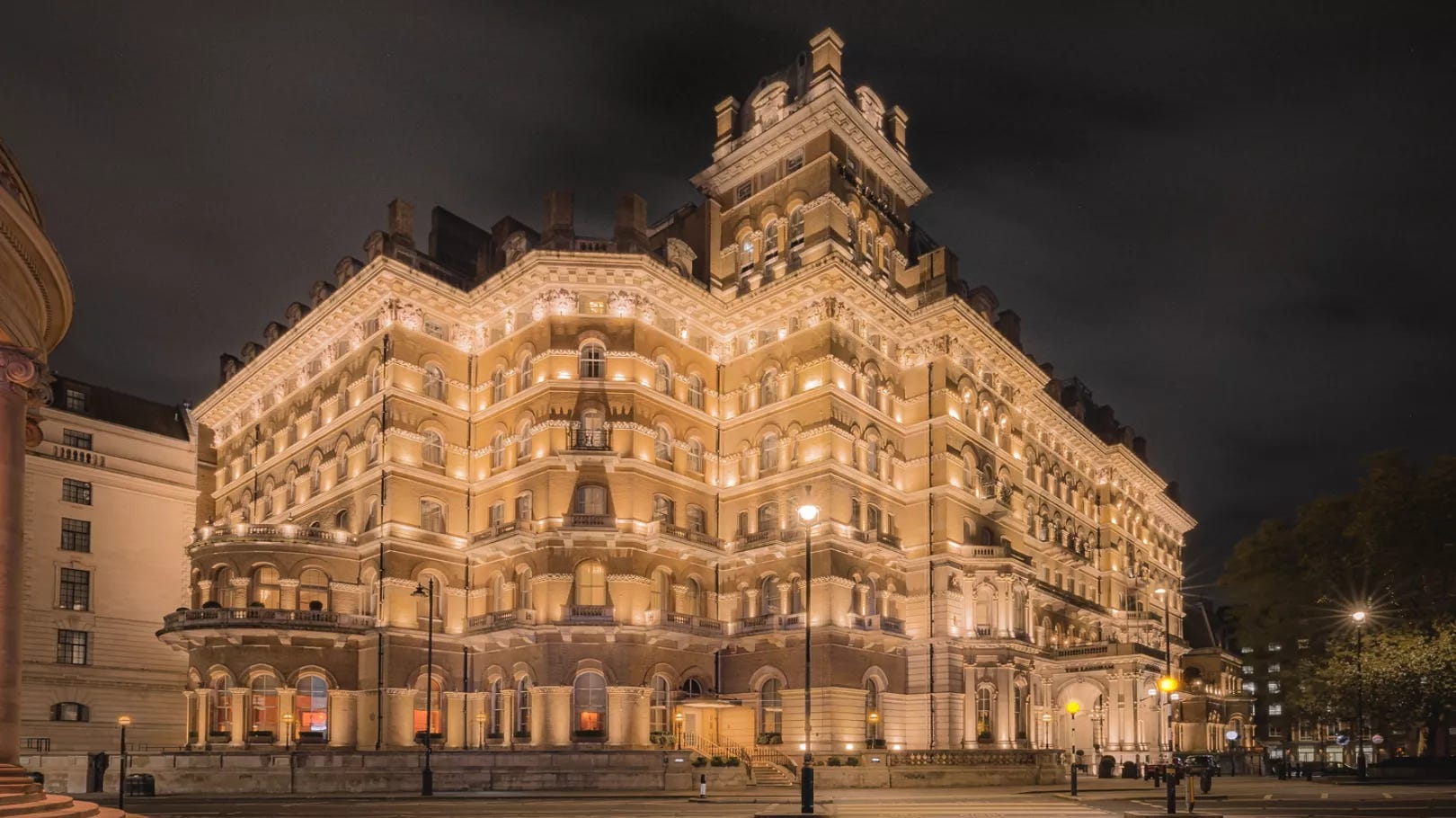
London’s Grand Hotel
I have always found London particularly seductive for this reason. My curiosity is easily fed by history, literature, art, writers, books, museums, music, architecture, and the city offers all of it in such abundance that even an ordinary walk can feel like an invitation to investigate something further.
My relationship with London is also more personal than intellectual; friends and family make returning especially pleasurable, while its fashion, abundance of shops and constant ability to reinvent itself provide another kind of stimulation. London rarely allows the appetite of discovery to become dormant.
Against that backdrop, The Langham feels almost inevitable. Opened on 10 June 1865, it was Europe’s first purpose-built “Grand Hotel,” conceived to transform the impression of luxury accommodation in London. Electric lighting, hydraulic lifts and air conditioning were among its early innovations, while its position soon made it a destination for royalty, artists, musicians and writers. Charles-Louis Napoléon III stayed there during his exile; Sir Henry Morton Stanley, legendary Journalist and Explorer; and Sir Arthur Conan Doyle used the hotel as a setting for several Sherlock Holmes stories.
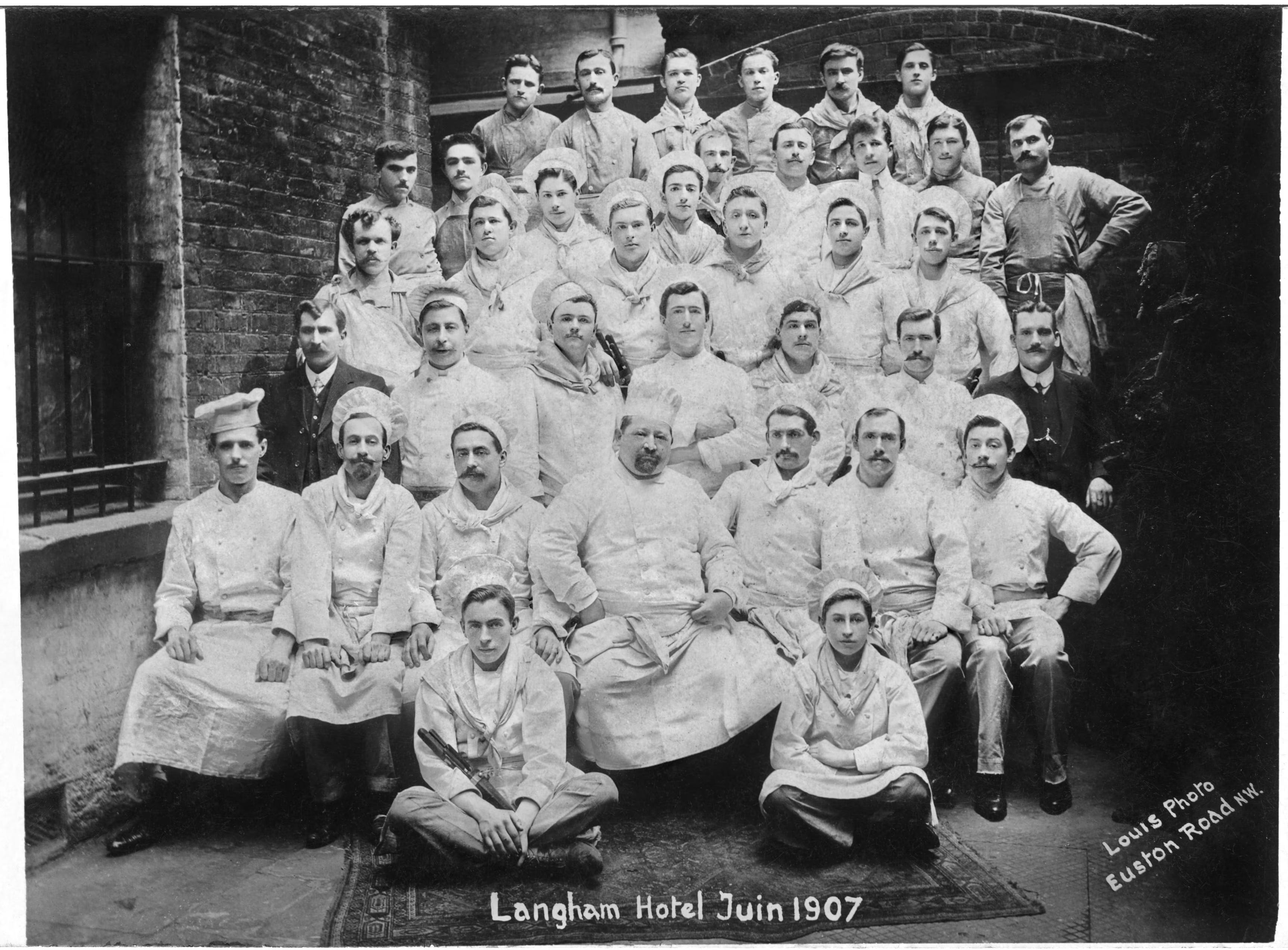
Yet what interests me more than the famous names is what happens when history becomes part of the character of a place. A hotel that has stood for more than a century and a half, inevitably absorbs something from the people who have passed through it. And The Langham’s story is inseparable from the countless encounters, conversations and occasions that have taken place within its walls. That feels like a more compelling understanding of heritage than simply preserving objects, dates and photographs. A building becomes meaningful because people continue to inhabit it, and its character shifts subtly with every generation that enters through its doors.
The Langham has survived war, changing fashions and ideas of luxury, including the destruction of much of its West Wing during the Second World War and its later occupation by the BBC. Its subsequent restoration allowed it to retain the sense of occasion that has always distinguished the house, while Palm Court, recognized by The Langham as the birthplace of afternoon tea, remains another expression of how the hotel has shaped the language of hospitality itself.
It is into this setting that Sale e Pepe has entered its next chapter.
Sale e Pepe Mare
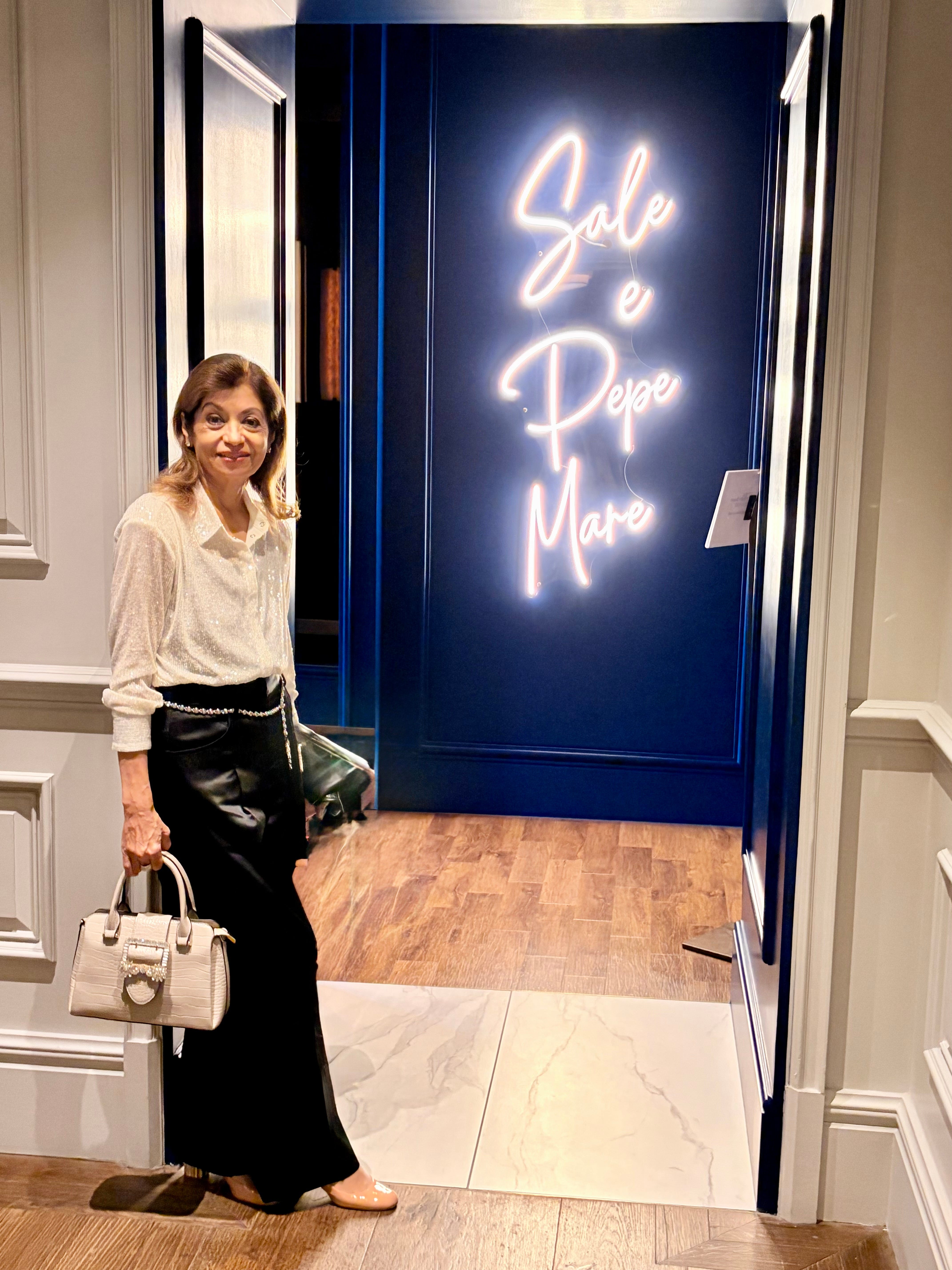
For more than fifty years, Sale e Pepe has been part of London’s dining landscape. Founded in 1974 by Toni Corricelli whose roots were in Puglia, the original Knightsbridge restaurant accumulated the kind of history that cannot be manufactured. Regulars, memories, relationships and a reputation built over decades rather than marketing cycles. When Markus and the Thesleff Group considered how that legacy might evolve, the intention was not simply to reproduce the original restaurant on a larger stage. The idea was to allow Sale e Pepe to move forward without losing what had made it distinctive.
Sale e Pepe Mare therefore feels like an evolution instead of a replacement, retaining the identity of Sale e Pepe while looking towards the Italian coast, particularly the Riviera, with influences extending from the Amalfi Coast towards Puglia. It is seafood-led, but not confined by seafood, with crudo, pasta, signature Milanese dishes, sharing plates and thoughtfully chosen cuts of meat sitting comfortable within the menu.


The new opening at The Langham also gives the restaurant a different relationship with London. The Knightsbridge restaurant remains the keeper of its intimate, accumulated history, while Mare has a larger and more international setting, bringing the name into a house whose own story reaches back to the invention of the Grand Hotel. Two London institutions finding a reason to move forward together.
The restaurant’s design, by Manuela Hamilford of Hamilford Design, creates an ambience that acknowledges the coastal identity without becoming literal, allowing the idea of the sea to sit beneath the expression as opposed to dominate it. There is contemporary lightness, but enough formality to feel at home within such a historic setting. The Mare (sea) gives the direction the Milanese thread reminds us that Sale e Pepe’s identity has never belonged to a single corner of Italy.


Interlude
My own connection to this story began rather more simply. Last year, whilst visiting my cousin, Lavina, in London, she suggested that my husband and I should enjoy dinner at Sale e Pepe in Knightsbridge and that it was one of her favorites. I highly value Lavina’s tasteful recommendations. We were fortunate to get a reservation, albeit a weekday, the restaurant was full when we arrived, with the energy of a place that had long since become part of its neighborhood.
Somewhere during the evening, I connected with one of the managers, and our conversation turned to the new restaurant opening at The Langham. He told me with complete confidence, that I would love it, I tucked the thought away in my notes. Word of mouth, still one of the most persuasive forms of discovery, certainly travels far. Please read the full article here.
When we returned to London last week for a family wedding, we found ourselves making our way to The Langham for dinner at Mare. Although not quite according to plan. Having made the simplest of calendar errors, we discovered that our reservations were for the next day and not today, as we stood before the host desk trying to figure out what had happened. Having arrived after travelling and carrying the inevitable effects of jet lag, we were not in a particularly convincing position to argue with our own calendar.
Hospitality is about awareness of the person in front of you, and empathy to understand what appears small from one side of the table can feel rather different from the other - Kiran Robinson
This was one of those small moments when hospitality becomes much more revealing than any polished description of service could ever be. Instead of making the mistake feel awkward allowing it to become our problem to solve, the host and hostess both welcomed us, found a lovely table without a wait and handled the situation with such natural ease that I never felt uncomfortable about having got the date wrong. My dietary requirements were accommodated effortlessly, and for a moment, I scarcely felt they were a consideration at all.
A nod, a smile, a softly spoken “everything good?” from the servers and sommeliers punctuated the evening, never intrusively, but with an attentiveness that seemed instinctive and universal across the room. Sofiane, our main server, was absolutely delightful, with a smile so naturally contagious that it became a part of the ambience around the table.
Sale e Pepe Mare Cuisine


The food was, quite simply exquisite.
~ Aranchini ai Funghi Porchini - Crispy Risotto Croquettes, Truffle Mayo, Fresh Winter Truffles
~Capesante al Forno - Josper-Baked Scallops, Chilli, Parsley, Garlic Butter
~ Costoletta Di Vitello - Bone-In Josper-Grilled Veal Chop, Rosemary, Garlic (the “S&P” signature dishes originate from their sister restaurant Sale e PepeKnightsbridge)
~ Carote Grigliate - Heritage Baby Carrots, Honey, Mustard,
~ Tagliatelle, Tenderstems of Broccolini
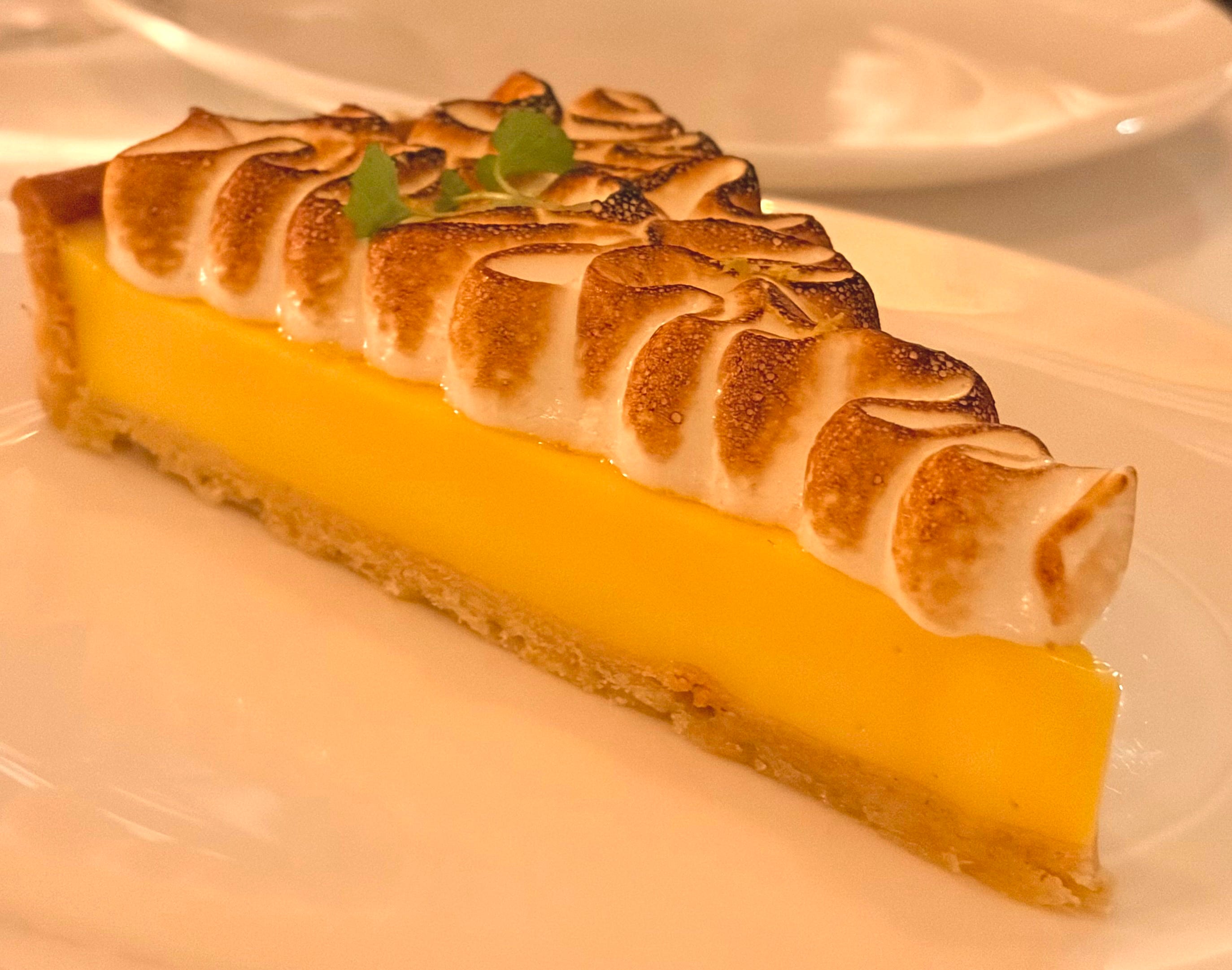
~ Crostata Al Limone Di Amalfi - Amalfi Lemon Tart, Italian Meringue
The wine selection journeys through Italy’s diverse regions and distinguished vineyards, while a Champagne trolley brings an elegant touch of theater.
The Chassagne-Montrachet 2023 alongside Ca’del Bosco Franciacorta Cuvée Prestige, each contributed its own character and nuance.


Yet as the evening progressed, I found myself immersed in what was happening beyond the food, particularly in a conversation with Carolina Hanlon, General Manager of Sale e Pepe Mare. Carolina is warm, passionate and easy to connect with. What interested me most was the thought she brings to training. Our conversation moved beyond the mechanics of service into judgement, awareness and sympathy. Teaching our teams not simply what to do but why they are doing it, how to read a guest and how to recognize that every table carries different expectations and circumstances.
Later, I noticed Carolina working alongside her team during a busy service. It gave practical form to what she had described. Leadership in hospitality cannot exist solely in an office or training manual, it must be visible in the room, particularly when the demands are greatest. Her presence suggested that awareness was not simply a principle discussed in training, no longer theoretical, but visibly part of the restaurant’s daily practice.
Razvan Pestean, Creative Director of Thesleff Group, sits within the broader creative direction of a group interested in how established London names can evolve without losing their purpose. The Langham carries the resonance of generations of hospitality, while Sale e Pepe carries more than five decades of memories in London. Marcus Thesleff carries his own early memories of the Knightsbridge restaurant into its next expression, and Mare takes the identity of Sale e Pepe towards the sea, towards a larger room and towards a broader London audience without pretending that evolution requires erasure.
Behind the storied luxury of its timeless façade, The Langham proves that even London’s most grand institution cannot entirely escape the shadows of its own history.