

By now, many of you will have grasped that I love London, a city I have written about more than any other. I have been fortunate to have visited this mega-metropolis that exudes design, art, dining, and culture many times. Each place I visit in London seems to uniquely alter the way I understand the city, through a rare alignment of place, culture, history and artistry. RH London is one of those places.
From Palo Alto to Mayfair
My first visit to RH Palo Alto was one of discovery. What captivated me was not simply the beauty of the setting, but the way architecture, design, art, landscape, dining and service seemed to belong to one carefully considered composition. It was a place to explore as much as to dine, and I found myself thinking about it not as a restaurant or a gallery, but as an expression of a particular way of living.
So, arriving at The Gallery in Mayfair, I recognized the same ambition, but almost everything else had changed. California’s openness and light had given way to the layered history of Mayfair. Burlington Gardens, New Bond Street, Saville Row, Palladian buildings and the particular energy of a city that has spent centuries reinventing itself. That difference is precisely what makes RH London so compelling.
If Palo Alto revealed one expression of the RH philosophy, London reveals another. I have come to think of it as a meeting of RH’s evolving design language with the character, culture and social life of London.
RH London opened on 27 June 2026, bringing the brand’s evolving vision to one of the world’s great metropolitan stages. At 7 Burlington Gardens, RH has brought together three adjoining properties to create five levels of interiors, food and wine within a historic Mayfair setting. The Gallery encompasses The Dining Room, The Perch, by Anoushka Hempel, the Architecture & Design Library, Tea Salon and Wine Bar forming part of the larger composition.
A Building with a Story
The Palladian mansion at 7 Burlington Gardens was built in the early eighteenth century and designed by Giacomo Leoni, the Venetian architect whose work helped establish Palladian ideas in England. RH’s own description emphasizes the building’s three centuries of cultural significance, while its corporate material records its later association with the Bank of England.
RH has not attempted to erase the significance of that history. The historic fabric becomes a layer of RH London’s story.
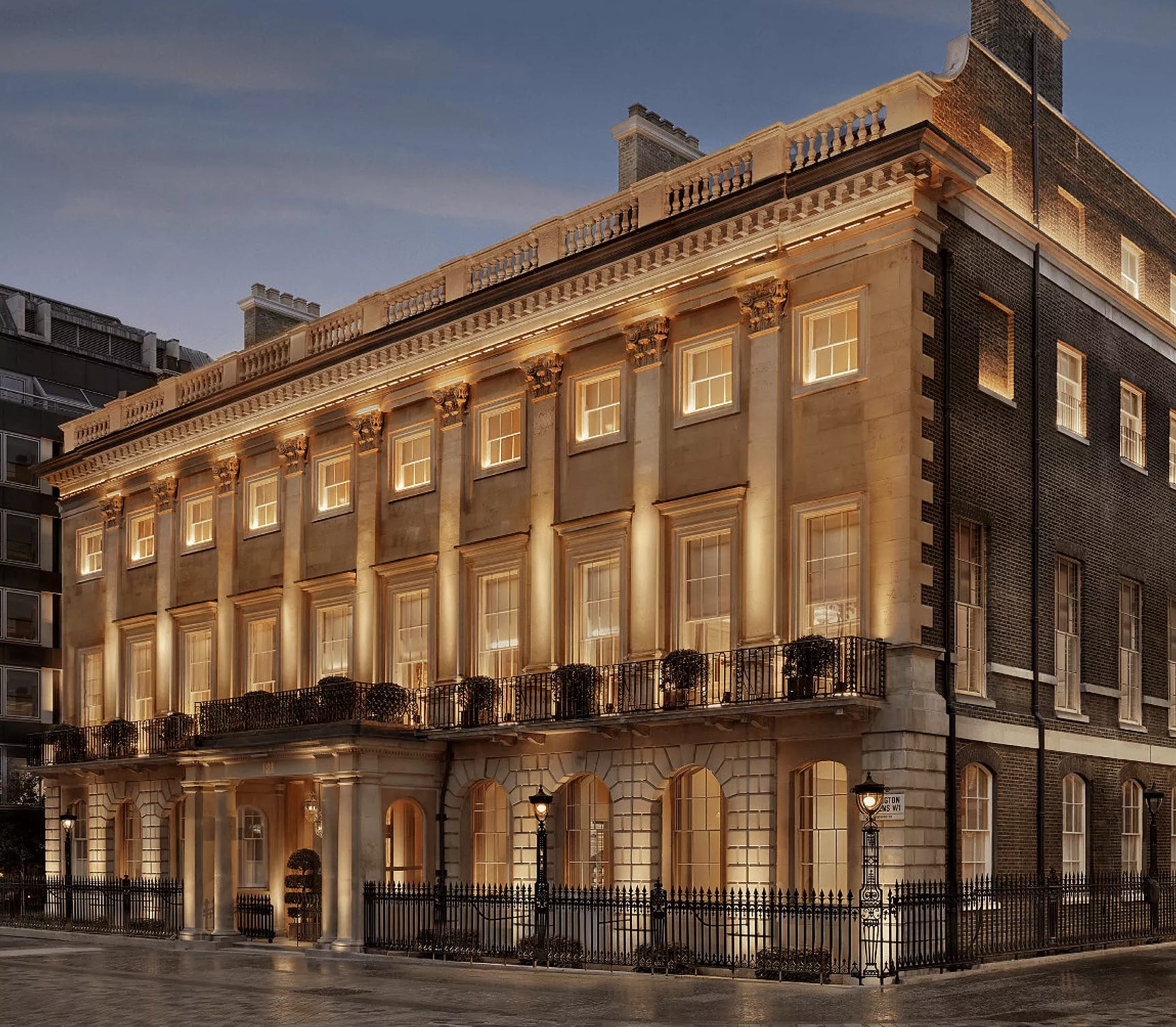
Walking through the Gallery, the classical proportions provide a framework for furniture that ranges from traditional to contemporary. The original character gives the interiors a sense of permanence, whilst the new interventions allow the building to move confidently into the present. Light is a defining part of that dialogue.
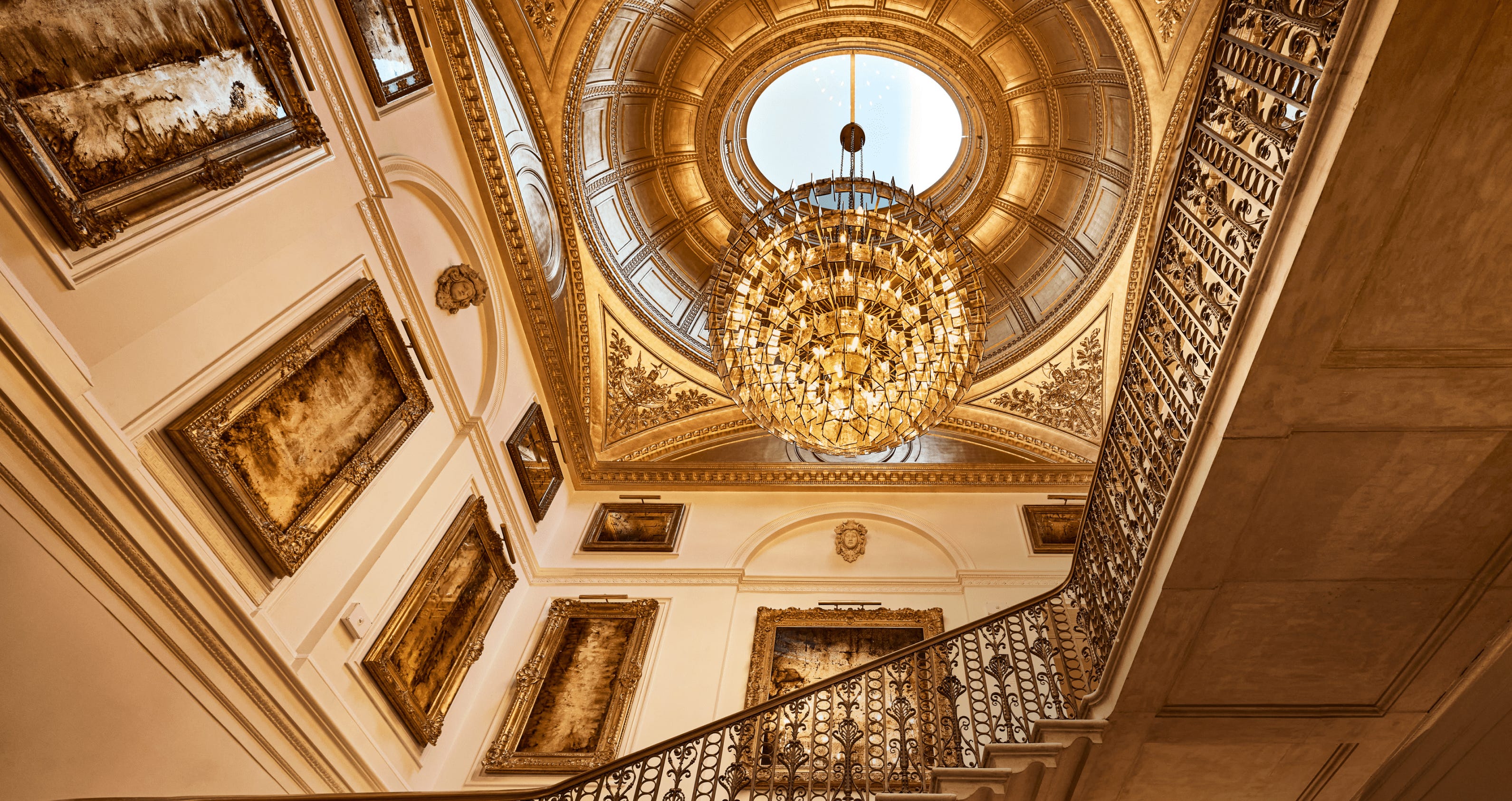
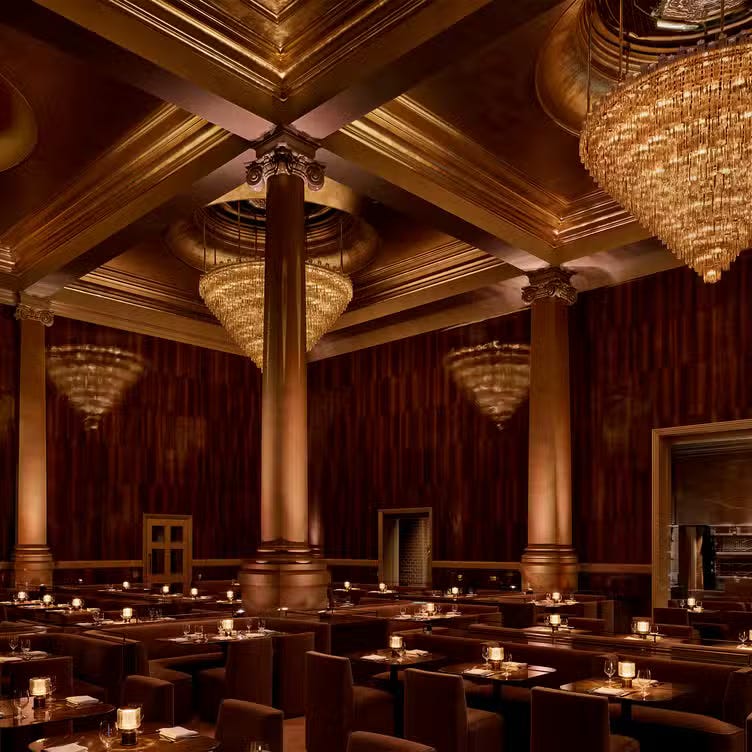
In the former banking hall, now The Dining Room, columns rise close to eight meters beneath a gold-leaf coffered ceiling, while tiers of hand-blown Venetian glass chandeliers descend from mirrored skylights above. They create a layered play of reflection, multiplying the light across the room and drawing attention to its extraordinary height and proportions.
Against the warmth of the gold ceiling, glass, metal and polished surfaces catch and return the light, giving the room a theatrical effect. Here, lighting is not just illumination, it is part of the art of shaping the dining room as the furniture and material do.


Elsewhere, the mood becomes more intimate. Darker surfaces, smoked glass and richly worked materials create another register altogether. The Gallery’s rooms each has its own personality yet remaining connected to the larger whole. It is an invitation to move through them. As you move, the building begins to reveal another story, one about the artisans and ideas that have shaped RH itself.
The RH Ecosystem of Design
RH has created a broader ecosystem of design, bringing together names, ateliers and collections. Its recent RH Estates collection draws on the archives of Michael Taylor Designs, Formations, Dennis & Leen, Joseph Jeup and Dmitry, whilst maintaining long-standing relationships with collectors and designers including Anouska Hempel.


The connection becomes even more explicit with the Mayfair Collection by Edward Robinson. Informed by the formal geometry of an eighteenth-century English neoclassical antique and by the character of Mayfair itself, the collection uses European white oak, fluted pilasters, inset paneling and carved corbel feet. Each piece is individually hand-sanded by artisans to give it an old-world character. Furniture and place become inseparable. The collection is not merely named after Mayfair; it is conceived in response to its classical framework.
Anoushka Hempel and the Language of Hospitality
Anouska Hempel’s contribution to RH London is particularly interesting because she has created a distinct social realm within the Gallery itself.
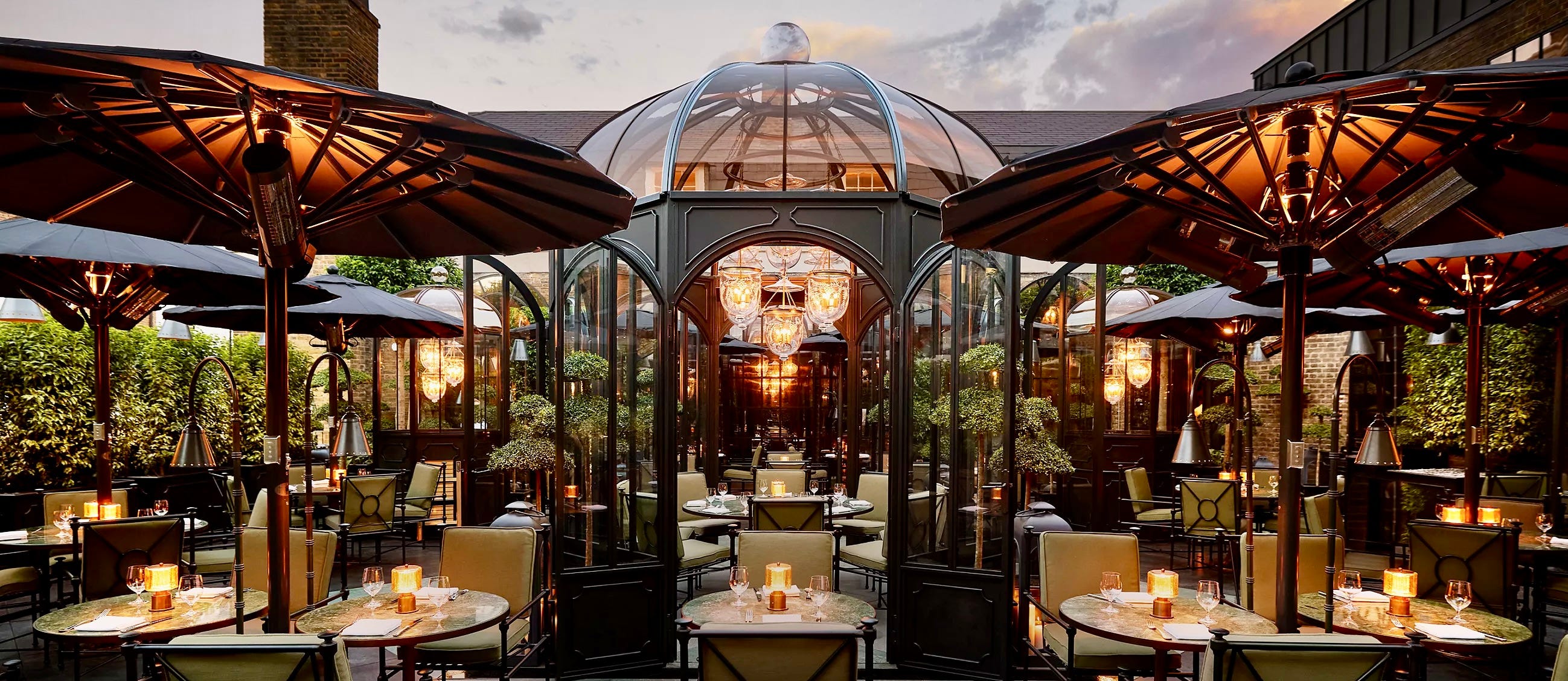
At The Perch, she has transformed the rooftop into an atmospheric garden of laurel trees, monumental glass birdcage structures, smoked glass and blackened églomisé (a dark, reflective treatment applied to glass). The Perch Bar and World of RH Bar & Lounge extend that language into the social spaces of the Gallery.
For someone whose career has moved between hotels, interiors, gardens, retail and design, this feels entirely natural. Her influence on boutique hotels is part of the history she brings with her, and at RH London she has created another chapter in that story.
The People Behind the Vision
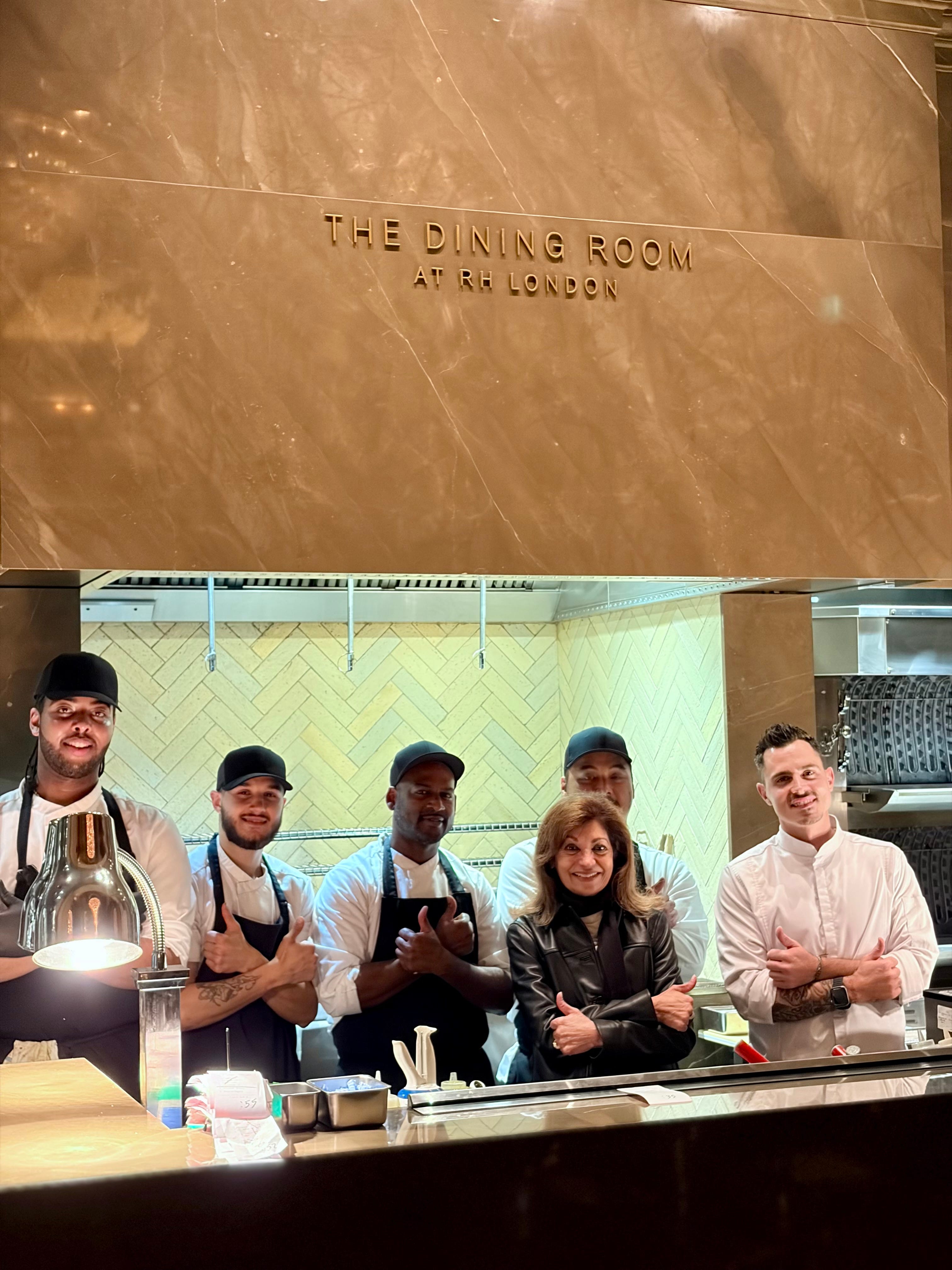
One of the most enjoyable aspects of my visit was meeting the team behind RH London and, in particular, connecting with the hospitality leadership.
There is something revealing about meeting the people who have taken such an ambitious creative vision and translated it into the reality of a working place.
Behind the Gallery is an exceptional team, from the management and front-of the house hosts who welcome guests and introduce the history of the building, to the hosts who orchestrate each arrival, the servers who attend to every table, and the chefs behind the menu. Each brings their own expertise, presence and polish as they become part of the interpretation of the Gallery itself.
Thank you to the team members we were able to meet and to the rest who were all part of the gracious hospitality we received:
Kamile Bukaveckaite - Hospitality Leader, Chef Matteo, Martin- Floor Leader, Kam - AHL, Matas,-First Server, Iven-Second Server
At the Table
After the setting has been established, food and wine draw on enduring classics and signature dishes, reflecting the broader culinary vocabulary. Caviar and delicate starters to dishes from land and sea, signature sandwiches and beautiful composed salads.
All the elements are brought into the same frame; this is where the idea of immersive dining becomes something that can actually be felt.


As I moved through the Gallery, the boundaries between categories became increasingly fluid. A furniture collection is a piece of the spatial character, an interior becomes part of the visual language, a rooftop is the point of view, the bar draws the social scene, and the former banking hall is the grand dining salon.
At the entrance, The Architecture & Design Library immediately establishes that idea, placing books and archive references in tandem. The library includes rare material, such as a 1521 Italian edition of Vitruvius’s De Architectura.
For someone with a long-standing love of history, literature, and aesthetics, that kinship is particularly appealing. It suggests that the objects within our environs are not isolated things. Perhaps this is where my own wanderlust begins, the desire to travel, discover, learn and understand how different places express the way people live.
“Hospitality begins where a place is more than a destination, and we are invited to see the world differently.” - Kiran Robinson
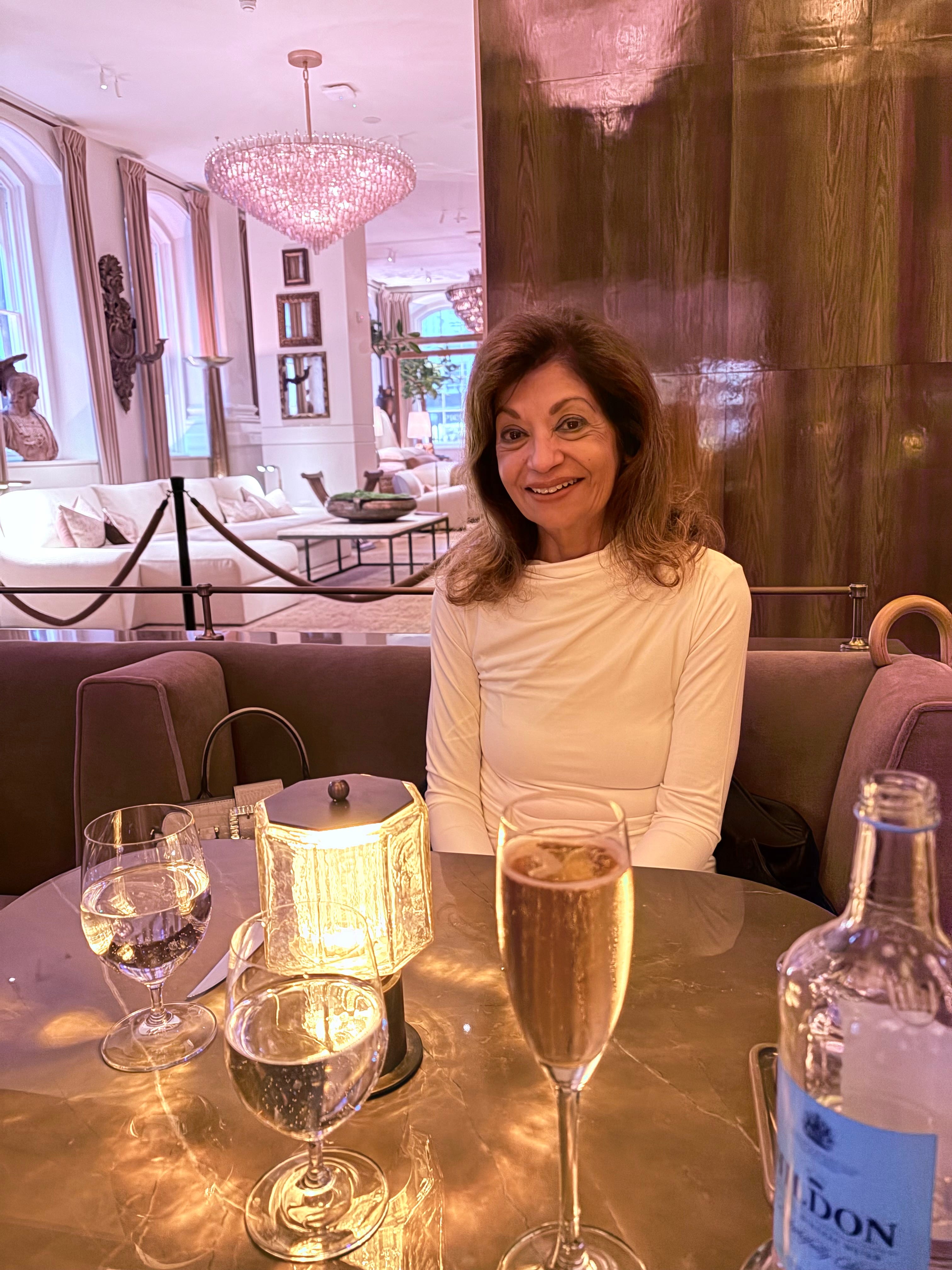
For me London does exactly that, giving me another way of seeing it. Between the Palladian rooms, the Mayfair furniture, the rooftop garden, the art, food, wine and the people who bring it all together, you begin to understand that the most memorable places are not necessarily those that ask you simply to admire them. They are the ones that make you curious enough to stay a little longer.