

In the world of hospitality, the aesthetic and service often captures one’s attention. Yet beneath the elegance of a well-prepared table lies a structure that sustains it all. Compliance. Carefully maintained standards of safety, training, and oversight forms are one of the essential pillars of professional hospitality.
It is the composed assurance that every dish served, whether in a grand hotel dining room or a hospital kitchen, has been prepared with discipline, vigilance, and respect for those who will receive it.
Arrival
Inspection is inevitable in hospitality. It serves as a test. The response speaks volumes about whether a team is prepared.
Panic is theatrical, but preparedness is composed.
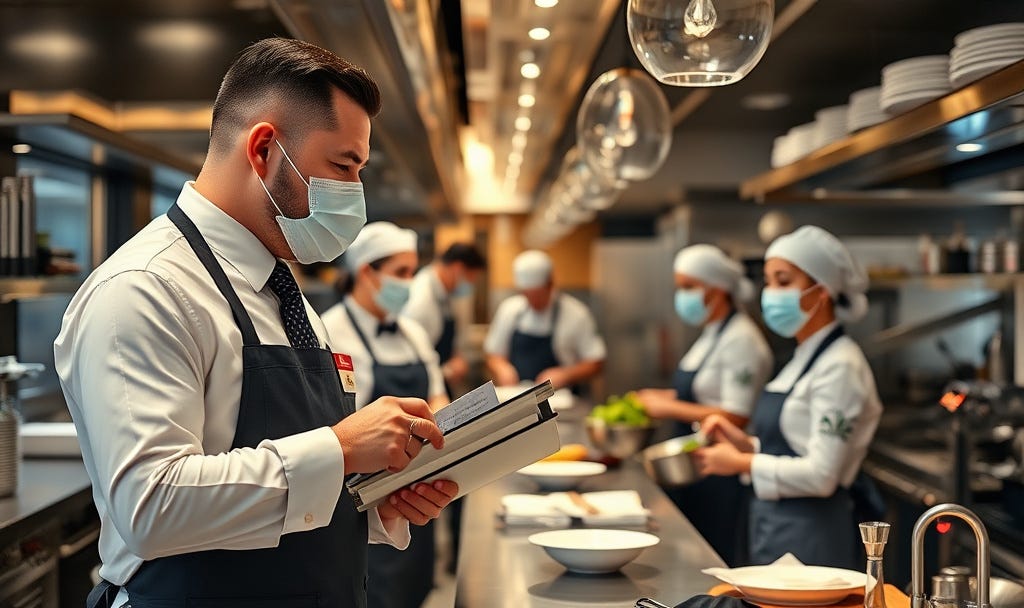
When word spreads that a visiting official has entered the premises, no one alters their pace. Stations remain orderly, logs are current and temperatures have already been verified. Hats, badges and gloves are all on. There is no hurried polishing for effect.
In refined hospitality, confidence is revealed under scrutiny. And what is revealed should be nothing more than simple daily practice. Authority does not threaten a well-led brigade. The room does not flinch.
A Lesson in Hong Kong

Years ago, in a five-star hotel in Hong Kong, Chef and I were designing a small wedding cake. Sugar work rested delicately along its tiers. We were adjusting final details, hands steady, concentration absolute.
Then a Hong Kong Food and Environmental Hygiene Department (CFS) inspector conducted an unannounced visit.
No one stopped or whispered, we continued shaping, smoothing and refining. Our hands did not tremble, the room did not shift.
The inspector said nothing until the final embellishment was placed. Then he clapped once and said, in Cantonese, “Wow. Now I’ve seen beauty come alive.”


Inspection did not interrupt excellence, it witnessed it. That moment stayed with me and continues to remind me that, when the test comes, true composure is not circumstantial, it is cultivated.
Heritage & Responsibility
Long before certifications, discipline shaped the great kitchens of Europe. Under Auguste Escoffier at the Savoy and later The Ritz Paris, structure defined responsibility. Roles were clear, stations were immaculate and systems reduced risk.
This was intended as protection rather than pageantry. Even in rooms defined by silver and ceremony, safety formed the foundation.
That legacy still speaks today, to both hospitality leaders and those who form health policies.
The Legal Framework in California
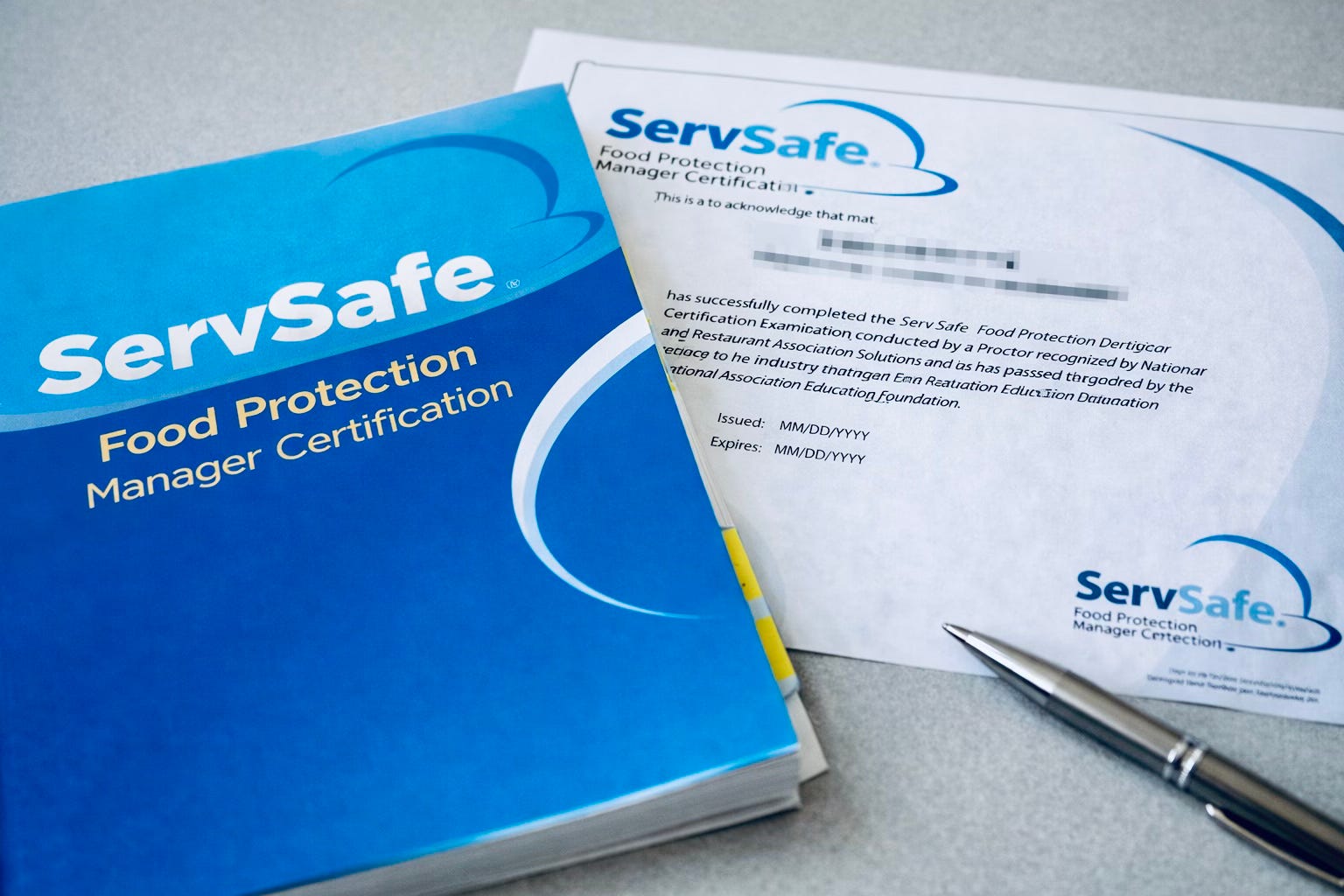
In California, food safety is governed clearly. The Serve Safe Food Protection Manager Certificate is required for chefs, managers and owners. It must be renewed every five years to comply with state law. The examination itself is conducted under the supervision of an authorized proctor, ensuring that the certification maintains its professional integrity. Renewal demands study and examination.
Food Handler Cards verify foundational training. Mandatory food allergy education prevents cross contact and ensures ingredient transparency. Staff management training strengthens oversight.
When facility types change, compliance adjusts. Catering differs from healthcare dining. Expanded retail introduces new controls. Any and all oversight must reflect context.
Refresher education on Hazard Analysis and Critical Points remains industry best practice. HACCP maps vigilance across receiving, storage, preparation, cooking, cooling, holding, and service. Revisiting these principles sharpens awareness.
Compliance is about involvement and renewal. It touches everyone and can never be allowed to be static.
Hospitality in Hospital
For over seventeen years, my work unfolded within a major medical center in Palo Alto, California. The scale demanded consistency across multiple kitchens: Executive Dining, Catering, Coffee Shops, Cafeteria, and Patient Meals. Each required protection without compromise.


Under The Joint Commission, inspection was thorough. Policies were reviewed and logs examined. Storage evaluated and staff questioned directly.
Early in my leadership, I made a deliberate choice. We would not hide or grow defensive. We would not allow inspection to create anxiety. Instead, we collaborated.
Inspectors were partners in safeguarding those we served. If criteria required adjustment, we asked for guidance. If an oversight was noted, we corrected it deliberately and documented the change. At subsequent visits, we demonstrated improvement confidently.

I recall an unannounced visit to the Catering Kitchen. An inspector noted a labeling detail that had changed in recent guidance. We retrieved the revised standard, relabeled the items, and recorded the adjustment.
There was no tension, only attentiveness.
At the next compliance visit, the same area was reviewed. Documentation reflected the correction. The exchange was brief and professional. The standard had been met.
Certification remained current without exception. Allergy training had been reinforced. Staff management principles were reviewed. HACCP refreshers revisited as best practice. Documentation supported everything, notes were precise.
Reports were organized intelligently and during our daily huddles, they became teaching instruments. Minor deviations were discussed constructively and training unfolded continuously within service itself.


Over time, compliance ceased to feel external. It became part of identity. When regulators arrived requiring alteration, the cadence of the room remained intact.
Perfect inspection outcomes were welcomed, yet never the objective. The objective was assurance where patients received nourishment safely, visitors dined without risk, and clinicians could focus fully on care.
Luxury in such an environment is defined by reliability.
Reflection
Hospitality reveals its integrity under examination. When vigilance is internalized, authority does not unsettle the environment, it affirms it.
Furthermore, luxury and compliance are not opposing forces. One shapes the experience. The other safeguards it.
Whether in a five-star hotel or hospital catering kitchen, the measure of hospitality is revealed under inspection.
When every detail from food safety protocols to service is upheld with care, it ensures that every guest or patient can trust both the experience and the protection it affords.
“When preparation is constant, inspection becomes affirmation.” – Kiran Robinson
Thank you, that line captures the heart of it for me as well. Luxury and compliance need not compete; when they work in harmony, one elevates the experience while the other protects it, ultimately serving guests, teams, and the wider industry alike.
Phenomenal read!!! 👏