

There are places that return to you without announcement. Luxembourg always carries that feeling for me. Familiar, yet never entirely fixed in time.
Above the Pétrusse Valley, where the city opens into a green expanse shaped by water and centuries of transformation, an estate rests with calm assurance, Villa Pétrusse.
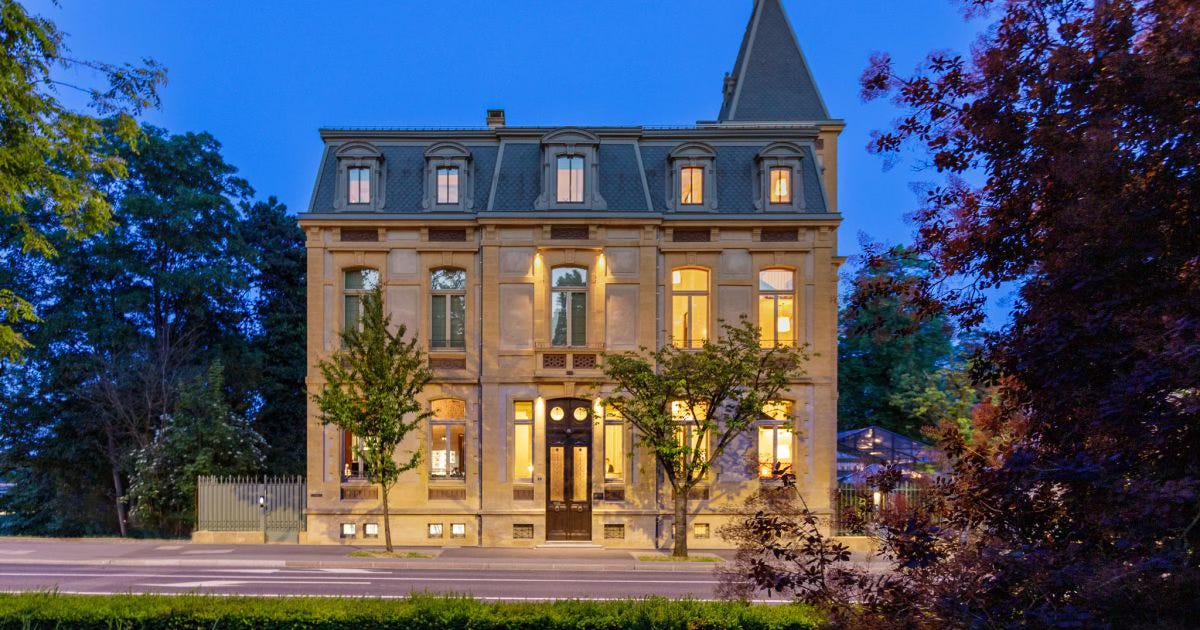
The property does not assert itself. It settles into its surroundings as though it has always belonged there, held between the landscape and the city that rises beside it.
As we arrive, Camille Mauny, Front Office Manager, offers a first welcome that is poised and unforced, setting a tone that feels immediately aligned with the house. From there, we are guided by Head Butler, David, through the property, revealing its layered architecture and the measured transitions between spaces.
Once known as Villa Baldauff, the residence has long held a position of prominence above the valley. Built in 1880 atop the ancient casemates of the former fortress, its foundations are anchored in a much older narrative. For nearly thirty years, the villa remained unoccupied, its structure preserved, its purpose suspended.


What has emerged is not reinvention, but a considered return.
The villa originally built by architect, Pierre Kemp, and restoration, guided by designer Tristan Auer, preserves the defining elements that give the house its identity. Monumental fireplaces remain as focal points, stained glass moderates the passage of light, and a concealed underground passage reconnects the villa to a pavilion beyond. Each intervention reflects discipline, allowing the building’s architectural integrity to remain fully legible.
Inside, the atmosphere is composed yet expressive. Materials are layered with restraint, allowing each room to hold its own identity without disrupting the continuity of the whole. Among these spaces, a Renaissance salon stands apart, its scale defined by expansive mirrors and frescoed surfaces that evoke a period of heightened craftsmanship, now held within a contemporary context.
The architecture frames its relationship with the landscape, maintaining a constant dialogue with the Pétrusse Valley beyond.


Below, the structure descends into historic casemates, where the original stonework has been reinterpreted as a wine cellar. Here natural conditions provide an ideal environment for the preservation of exceptional bottles. Guests are invited to experience curated tastings led by the head sommelier, where knowledge is conveyed with precision and depth.
A further dimension of the house is found within its wellness offering. Guided by Susanne Kaufmann’s Alpine philosophy, the spa experience is shaped through purity of approach, where materials, treatments, and environment align to create a sense of restoration that feels intrinsic to the house itself.
Villa Pétrusse is a member of Relais & Château, a collection defined by properties where heritage and hospitality are held in esteemed balance, and where individuality is preserved rather than standardized.
The General Manager, Stéphanie Raimbault, brings a composed and assured presence to the property. Her international experience is evident in the consistency she establishes, ensuring each element of service echoes a focus on the art of the essential.


In the kitchen, direction is led by Executive Chef Kim de Dood, a Luxembourg-born chef, whose path reflects both mastery and breadth. Trained at École d’ Hôtellerie et de tourism du Luxembourg, his early formation took him through Michelin-recognized kitchens in Europe, including Becker’s in Trier and The Waterside Inn, where classic technique was refined with rigor.
His trajectory then extended into Asia. At Saint Pierre, he rose to head chef at a notably early stage, later earning two Michelin stars. His work continued in Kuala Lumpur and at the Luxembourg Pavilion during Expo 2020 Dubai, where he represented his country’s culinary identity on an international platform.
Returning to Luxembourg, his approach reflects both origin and expansion. At Restaurant Le Lys, he presents a cuisine grounded in Luxembourgish tradition while incorporating a broader understanding of flavor shaped by his years abroad. Classical references are revisited and reinterpreted with structure and precision, allowing them to evolve without losing their foundation.
His cooking is measured and deliberate, drawing connections between taste and memory and establishing a relationship with the guest that extends beyond the plate.
Dinner in the Brasserie Ciel brings this philosophy into focus. We enjoyed shareable plates, tasting a variety of dishes with our friends.


Spring White Asparagus; subtle & sweet with a mild earthiness and silky texture, served with a vibrant vinaigrette, a garnish of traditional mimosa topping of finely chopped hard-boiled egg.
Lobster Ragout with Pappardelle; delicate sweetness of lobster meat coupled with exotic warmth.
Squash Carpaccio; reimagining the classic by using thin shavings of spring squash as a canvas for bright & nutty flavors.
Kniddelflette, traditional soft flour dumplings, a cornerstone of Luxembourg comfort food. A simple preparation that requires a specific technique.
Slice of Homemade Pie of the day -Granny Style.
Thoughtful recommendations to the very last bite, inclusive of outstanding quality wine selection, expertly curated pairings, both diverse and extensive, allowing for reasonable discoveries, was simply sublime.
Throughout our stay, the human presence of the team remains consistent. Aliana, a young member of the service team, brings warmth and sincerity to each interaction, her natural ease contributing to the atmosphere of the house.
In the early hours of departure, Olivier at the front desk ensures a seamless transition, his attentiveness reflecting the same level of consideration present throughout the experience.
Across all moments, there is a sense of coherence. Architecture, design, cuisine, and service exist in synchronicity.
Above the valley, the hotel does not distance itself from its history. It exists within it, shaped by centuries beneath its foundations and by a long period of stillness that has strengthened its immanence.
What has been realized here is not simply restoration, but continuity.
Time spent here lingers. Shared moments around the table, conversations carried into the evening, and a sense of place that remains long after departure.
This boutique hotel, with twenty-two rooms and suites, and bespoke gardens to feast upon, is without question, somewhere to return to again and again.
Hospitality is where intuition meets excellence ~ Kiran Robinson
The place looks amazing.......
Villa Pétrusse feels like a masterclass in calm assurance. There’s something so grounding about hospitality that honors the green expanse and centuries of history like this.