

Being in Napa during early summer changes the way hospitality is understood. Much of the understanding begins between destinations: from vineyard to menu.
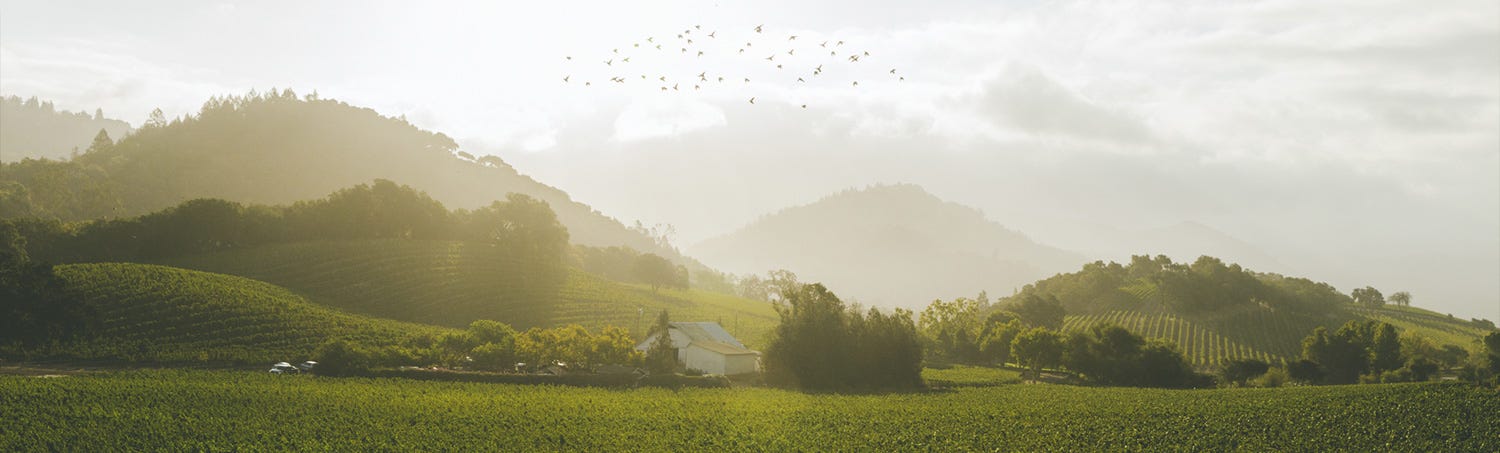
Driving north along the Silverado Trail, the valley reveals itself gradually. Vineyard rows trace the contours of the land, olive groves appear unexpectedly between estates, and orchards carrying white peaches, Blenheim apricots, and early nectarines signal the arrival of summer.

To the west, the Mayacamas Mountains rise above the vines; to the east, the Vaca Range frames the valley floor. The journey itself becomes part of the perception.
What is striking is not a single view, but the continuity of landscape, how cultivated land and wild structure exist in the same visual language. Everything feels in conversation.
It is only later, after time spent moving through the valley, that a different understanding begins to form, that what is seen outside the window is shaping what appears on the plate and in the glass.
At that point, the language often used to describe contemporary hospitality begins to feel insufficient.
The Difference Between Sustainability and Stewardship
The idea of “sustainability” is everywhere in modern food and wine culture, yet it is often used as a finish rather than a foundation. At its simplest, Sustainability describes the ability of a system to persist without depletion.
Stewardship, however, is something more deliberate. It is the responsibility of ensuring that continuity remains possible.
Grasping this distinction makes all the difference in any hospitality setting (i.e., everywhere).
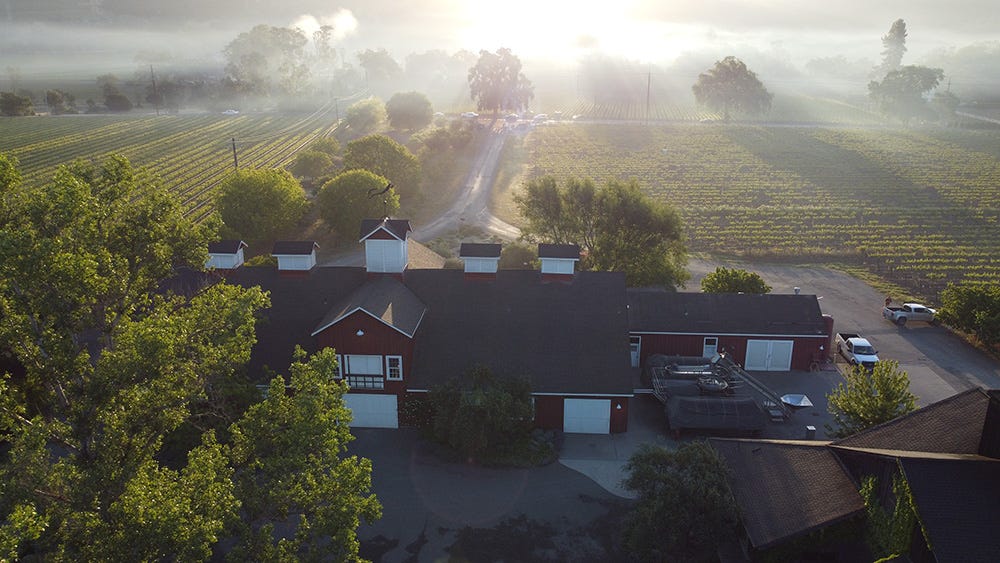
Across Napa Valley, this difference is visible. It appears in vineyards farmed with long-term soil health in mind, in growers working cycles, and in winemakers who favor restraint over intervention.
Producers such as Frog’s Leap Winery, an organic visionary and Grgich Hills Estate, an historic icon, as well as Quintessa Estate, the architectural masterpiece, all express this not as positioning, but as practice.
And it is here that food begins to reflect the same shift.
Harmonious Attunement
Moving through Napa’s contemporary dining landscape, what emerges is a consistency of harmonious attunement to their surroundings, rather than the fixed plant-based philosophy.
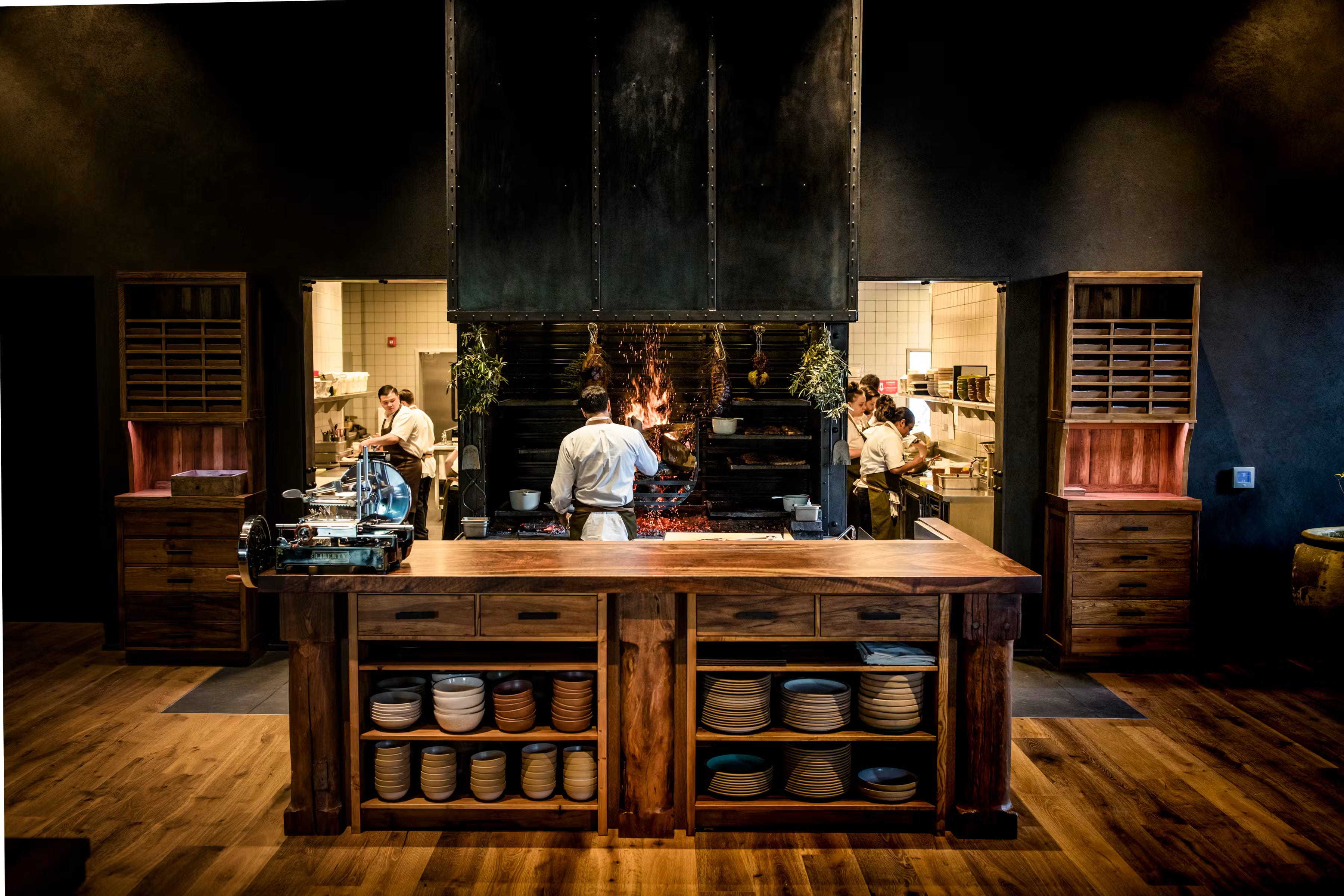
At The Charter Oak, vegetables are treated with fire and subtlety, their character shaped by heat and season.
At Farmstead at Long Meadow Ranch, the connection to land is direct, with ingredients drawn from estate farming and nearby growers, allowing the menu to shift as the fields change.
At Lucy Restaurant & Bar, seasonal produce is expressed with lightness and moderation, where composition is guided by freshness not richness.
Taken together, these are beautiful expressions of proximity.
Ahh, the Produce!
Early summer in Napa best represents itself in its amazing produce.
Heirloom tomatoes arrive first, often still carrying the warmth of the sun. They are served in their simplest form, sliced and dressed with olive oil, basil, salt, nothing else is added that does not already belong. Their flavor is immediate, shaped by ripeness and timing.


Stone fruit follows closely behind. White peaches, apricots, and nectarines appear in combinations that rely on balance rather than construction, often paired with herbs or soft acidity. The effect is not complexity, but precision, fruit allowed to remain fruit.
Elsewhere, fire becomes the primary instrument of transformation. Carrots, beets, squash, and mushrooms are wood-fired in an open hearth, until their natural sugars deepen. Occasionally, they are finished with reductions that carry faint traces of the vineyard itself. Grape must, wine vinegar, or herb infusions that tie the kitchen back to soil with intention to the mechanism.
Wine Writes the Menu
At this point, wine isn’t merely an accompaniment, but somehow becomes part of the same landscape (speaking in a different register).
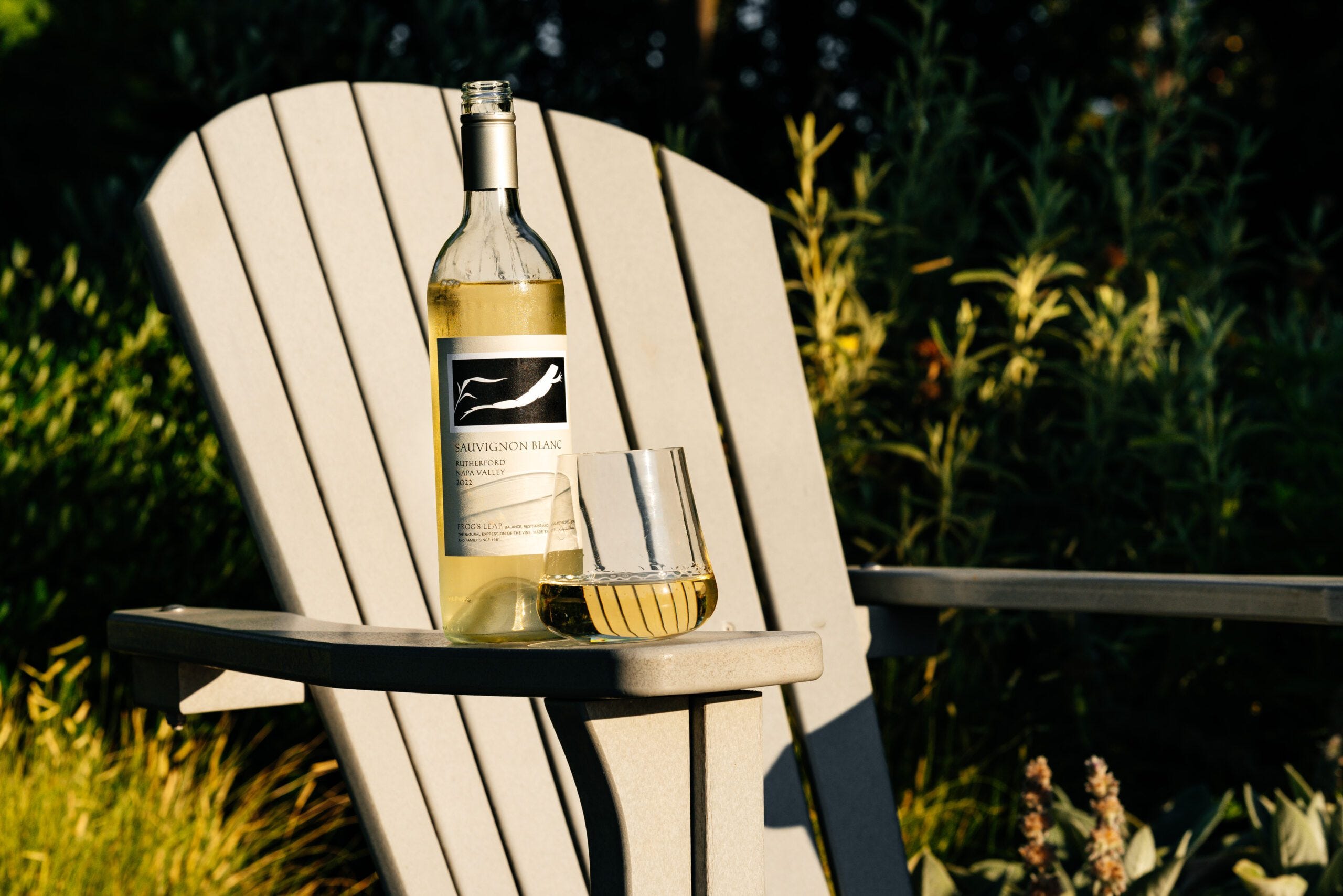
Frog’s Leap Winery crafts a Sauvignon Blanc defined by vibrant grapefruit and fresh cut herbs, driven by a line of precise acidity. There is a fresh mineral edge beneath it that recalls early morning air moving through the domain before heat settles in. With tomato, cucumber, and herb-driven dishes, it does not interrupt the food, it sharpens it.
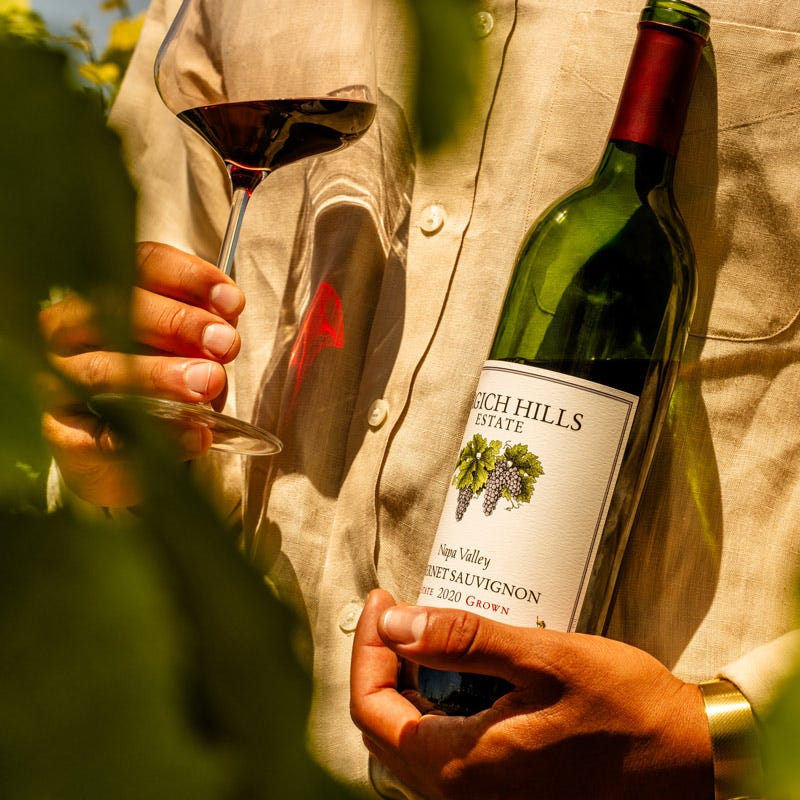
With deeper vegetable preparations; roasted roots, mushrooms, and squash, Cabernet Sauvignon from Grgich Hills Estate brings structure. Blackcurrant, blackberry, cedar, and dried herbs unfold, slowly supported by tannins that frame not overwhelm. Beneath the fruit lies something more elemental. Sun-warmed soil, dry grasses, and the dense stillness of vineyard terrain at the end of a long season.
For a sublime summer finale, pair a White Peach and Lemon Verbena Tart with Illumination by Quintessa. Crafted as a certified biodynamic wine, this elegant white blend mirrors the bright stone fruit aromatics, while its rich texture and crisp acidity offer flawless summer palate cleanser.
Across both food and wine, the pattern is the same. What begins as a landscape gradually becomes ingredient, then preparation, then pairing.
“Hospitality begins long before a guest arrives. It starts with the stewardship of land, passes through the hands of growers, winemakers, and chefs, and ultimately arrives at the table as an expression of place.” – Kiran Robinson
Perhaps Napa is threading through, toward alignment, not into greater complexity, but into a more distinct expression.
In early summer, the valley offers an echo of a simple truth that the most resilient meals are not constructed. They are revealed. When the vineyard writes the menu, nothing is added that does not already belong.
That is the essence of true stewardship.
Can’t wait for your visit💕
Beautifully written.
So much food and wine writing focuses on what is being served; this captures everything that happens before that moment. The valley itself feels like a character throughout the piece!