

L’Ascension d’une Étoile
When I returned to Villa Pétrusse, Luxembourg, I had the pleasure of meeting with Chef Kim de Dood once again. We first met in April, when Le Lys was still establishing its identity and the possibility of a Michelin star remained just beyond the horizon, a conversation I shared here with readers before.
Villa Pétrusse

There are places that return to you without announcement. Luxembourg always carries that feeling for me. Familiar, yet never entirely fixed in time.
A few weeks ago, I sat across from the same chef with one significant difference, the star we had spoken about so carefully was no longer an aspiration. It had become part of the story of Le Lys. We spoke then about Kim’s ambitions, his journey and his vision for the restaurant, but the outcome was still unknown.
There was, fittingly, a little suspense in the way the news itself unfolded. Michelin had been in contact with the restaurant, yet the formal invitation to the ceremony in Antwerp had not reached the team. When they contacted the Guide, Michelin, itself was equally surprised that the invitation had not arrived. It had been sent. Then, after a brief moment of uncertainty, the email finally appeared. The invitation was received, arrangements were confirmed, and the team was asked to ensure that they would be present in Antwerp.
What had seemed like an administrative mystery suddenly carried an altogether different significance. The team realized that they were not simply being invited to attend the Michelin ceremony; they were being invited to receive a star.


On 4th May 2026, at the Belgium and Luxembourg ceremony in Antwerp, Le Lys was awarded its first Michelin star, the only new star awarded to a Luxembourg restaurant in the 2026 Guide. For a restaurant that had opened less than a year earlier, the recognition was remarkable.
For Chef Kim, it carried an added significance of achieving it in the country where his own culinary story began.
So, what does the star mean beyond recognition itself? Kim answered with characteristic simplicity: “Cherry on top of the cake. A big thank you to the team.”
It is an apt description. The cake is the years of work, the experience gathered abroad, the ideas, the kitchen, the restaurant, and the people who have built Le Lys together. The star is the celebratory finishing touch.
The collective spirit became even clearer when I asked Kim what the moment meant to his team. His answer was unexpected and rather wonderful: “Having the best car won’t win the Formula One alone. You need a good driver and a fantastic team as well. And second, friendship. We are all friends here, so we help each other and push each other towards our goal.”
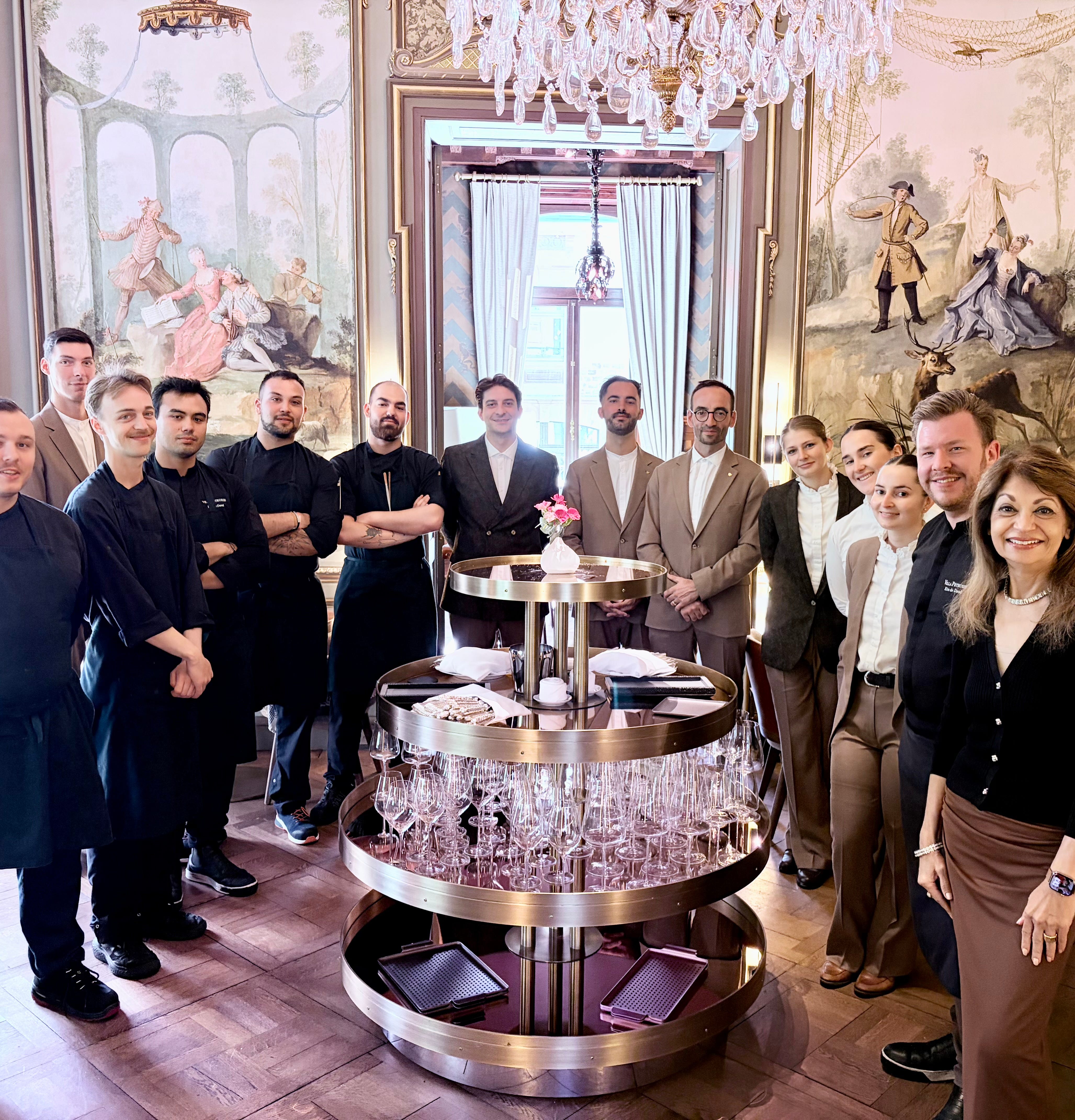
Formula One evokes precision, speed, and discipline and an almost extraordinary level of collective concentration. Friendship introduces something warmer and more human. Together the two words describe the particular alchemy required in a serious kitchen, everyone must know their role, trust one another implicitly and perform at the highest level, while still sharing a bond strong enough to carry the intensity of the work.
Le Lys embodies that same dialogue between heritage and renewal.
Housed within Villa Pétrusse, the nineteenth-century residence formerly known as Villa Baldauff underwent five years of restoration before being given a new life as one of Luxembourg’s most distinctive luxury addresses. The hotel welcomed its first guests in June 2025, with Le Lys opening the following day.
Kim’s own journey mirrors that transformation. Born in Luxembourg, he spent formative years working in Asia, including Singapore and Kuala Lumpur, absorbing techniques, tastes and perspectives that would eventually become part of his own culinary language. Returning home was therefore not a retreat into familiarity, but an opportunity to reinterpret it.


When I asked him how he would describe his cuisine today, and whether it had evolved since Le Lys first opened, his answer was admirably direct: “Me on a Plate.” He describes it as “Luxembourgish with an Asian touch”, adding that there are “new ideas all the time.”
Those three words “me on a plate”, say more than any elaborate culinary manifesto could. That philosophy comes vividly into focus in the current summer menu at Le Lys, where the season is given room to speak through a succession of considered compositions.
An Unfolding Portrait of Chef Kim
Rainbow Trout, Kimchi Wasabi
Halibut, Corn Lemongrass
Mussels, Saffron, Fennel
Langoustine, Rendang, Maitake
Sweetbreads, Thai Green Curry, Borlotti Beans
Pigeon, Blackberry, Purple Curry
Michelin itself recognized this synthesis, describing Kim’s cuisine as a meeting of Luxembourgish roots and Asian nuances, with notable subtlety. A gastronomic distinction transcends the debate of tradition versus innovation. It honors the deliberate tension of textures and culinary expression brought to life by an avant-garde chef de cuisine.
That tension is central to Kim’s cuisine. Tradition is not treated as something immutable, nor innovation as an end in itself. Instead, the two are allowed to meet on the plate, creating something that belongs unmistakably to Kim.
Meeting Kim with his full brigade, I was equally interested in what surrounded the food. There was a composed confidence to the team, nothing theatrical, nothing forced, simply people who understood the tempo of the room and of one another.
And that brought me back to the wider story of Villa Pétrusse, because receiving guests begins long before one reaches the table at Le Lys.


General Manager, Stéphanie Raimbault offered an elegantly judged greeting, with the assurance of someone who understands the character of the house represented. It created nostalgia, a feeling of being honoredinto a piece of Luxembourg’s history.
Room Division, Manager Camille Mauney, personalizes that same sensibility to every stage of our stay as though it was so simple, allowing the character of Villa Pétrusse to reveal itself through her own knowledge and care.
David, Head Butler, brings a ray of sunshine at every encounter, always ready with the kind of unparalleled assistance that makes a stay feel organic.
At Brasserie Ciel (sky), an especially poetic name for the conservatory where breakfast unfolds. Bathed in morning light and accompanied by birdsong, it possesses an almost ethereal quality, inviting one to linger over the first hours of the day.
André wears a smile perfectly befitting of a front-of-the- house manager, a genuine morning smile that lifts the spirit and sets the day on its way.
Then there is Momo, whose gestures are instinctive. He noticed the choices we enjoyed and contacted room service so that the same accoutrements could be made available to us throughout the day. An almost imperceptible gesture, yet one that spoke eloquently of hospitality at its most refined.
After years of developing his craft abroad, the recognition had come in his own country. The emotion of the occasion belonged to the entire brigade. Chef spoke with evident pride about the people around him, describing the achievement as a wholesome collaboration A star may ultimately be attached to the name of a restaurant, but its creation is never the work of one person. Behind the Chef is a brigade; behind the brigade is the dining room; behind the dining room is an entire house whose people, standards and spirit shape what the guest ultimately experiences.
That sense of continuity is particularly evident at Villa Pétrusse. The hotel occupies the former Villa Baldauff, a nineteenth-century residence overlooking the Pétrusse Valley that underwent five years of restoration before being given a new life. Villa Pétrusse welcomed its first guests in June 2025, with Le Lys opening the following day as its gastronomic expression.
Villa Pétrusse is a house that respects its history without becoming imprisoned by it. The architecture remains unmistakably of its time, while the experience has been given a contemporary purpose.
Luxembourg allowing them to converse with the flavors and traditions he had known from childhood.
That blend is perhaps at the heart of Chef Kim’s cooking, a respect for what has come before, coupled with the confidence to take it somewhere unexpected. It is not a question of choosing between tradition and modernity, but of allowing the two to meet in a way that feels considered.
The result is a cuisine with both memory and movement, grounded on place, yet unmistakably shaped by a chef whose perspective has been formed far beyond it. Sitting with Chef Kim and meeting his whole brigade at Le Lys, I was struck by the fact that the Michelin star seemed almost secondary to the atmosphere surrounding it. There was no sense of a young team resting upon its achievement. Instead, there was composure and confidence. The precision was evident, yet it never felt mechanical, there was genuine camaraderie.
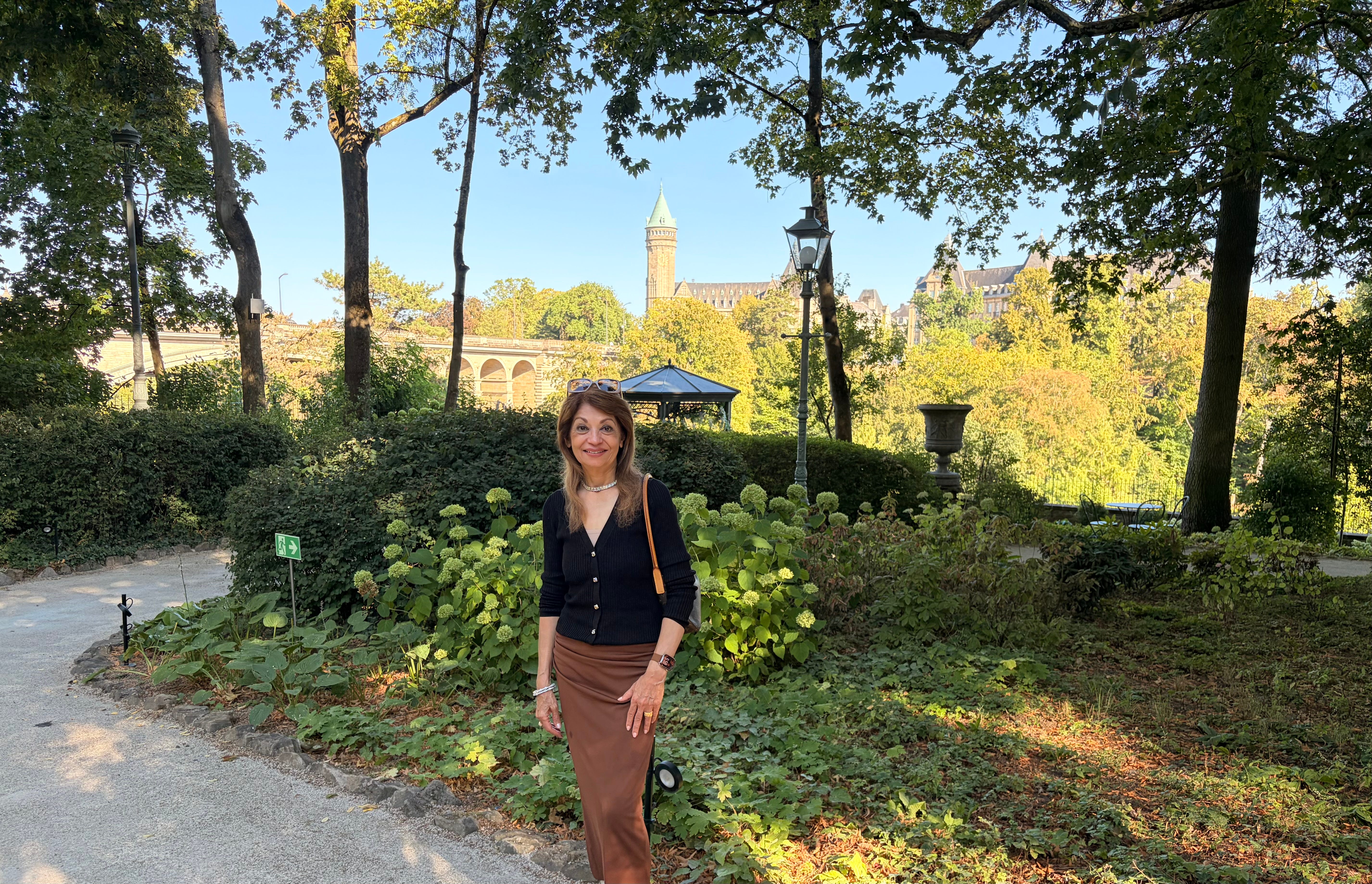
Yet the word Kim placed beside it was friendship. For him, the achievement is not simply about operating at the highest level, it is about the relationships that make that intensity sustainable and meaningful.
“Hospitality is where intuition meets excellence.” - Kiran Robinson
It gives greater meaning to Kim’s own perspective on the Michelin star. “A star is good, but it is certainly not the most important thing.” His words are especially powerful considering he just received the most coveted distinction in gastronomy. This suggests that the star is not the destination, but a way of working, one that depends upon people, consistency, curiosity and the desire to make each experience matter.
And perhaps that is what made returning in August so rewarding. In April, I met Kim before the answer was known. In August, I met him after the recognition, and yet the essence of the man and the restaurant remained unchanged. What had altered was the light cast upon them.
In April, the star was still a question, today, it is sewn in Kim’s Chef coat.
Boom